From ticket to feature in 20 minutes — a real Morphora story
A customer needed per-test-case phone numbers in gentesty. Morphora delivered the feature in 20 minutes.
The feature request that didn't wait
Your customer writes a ticket. You triage it, put it in the backlog, assign it next sprint, find a developer, brief them on the context, wait for the implementation, review the PR, merge, deploy. Two weeks later — if you're lucky — the feature is live.
What if that entire chain collapsed into 20 minutes?
This isn't a hypothetical. It happened last week on gentesty, our voicebot evaluation framework. A customer filed a feature request. Morphora picked it up, analyzed it, wrote the code, and delivered a verified pull request. Nine files changed. Forty-seven lines added. Three removed. Done.
Here's how it went.
What gentesty does — and why the phone number mattered
gentesty lets you test voicebots by calling them with real phone calls. You define test scenarios, gentesty dials the customer's voicebot, runs the conversation, and evaluates the responses. It's how teams verify that their voicebot actually behaves the way it should — before real customers call.
Until now, the outgoing phone number was configured once per voicebot. Every test call used the same number, no matter what scenario was running.
Our customer needed something different. Their voicebot personalizes responses based on the caller's phone number — greeting the customer by name, pulling up their account, adjusting the conversation flow. To test that behavior properly, they needed to assign a specific phone number to each test case. One number per simulated customer. One call per identity.
A clear request. A small scope. But under the old process, even small changes take time.
What this normally looks like
You know the drill. A feature request like this — well-defined, small scope, low risk — still runs through the full delivery pipeline:
- Ticket gets triaged and prioritized
- A developer picks it up, reads the context, explores the code
- Implementation, tests, review
- Merge, deploy, notify the customer
For a change that touches 9 files and nets +47/-3 lines, the process takes longer than the work. Days at minimum. More realistically, a week or two — squeezed between higher-priority items.
The customer doesn't care about your sprint cadence. They want the feature.
What Morphora did
The customer created a GitHub issue on the gentesty repository:
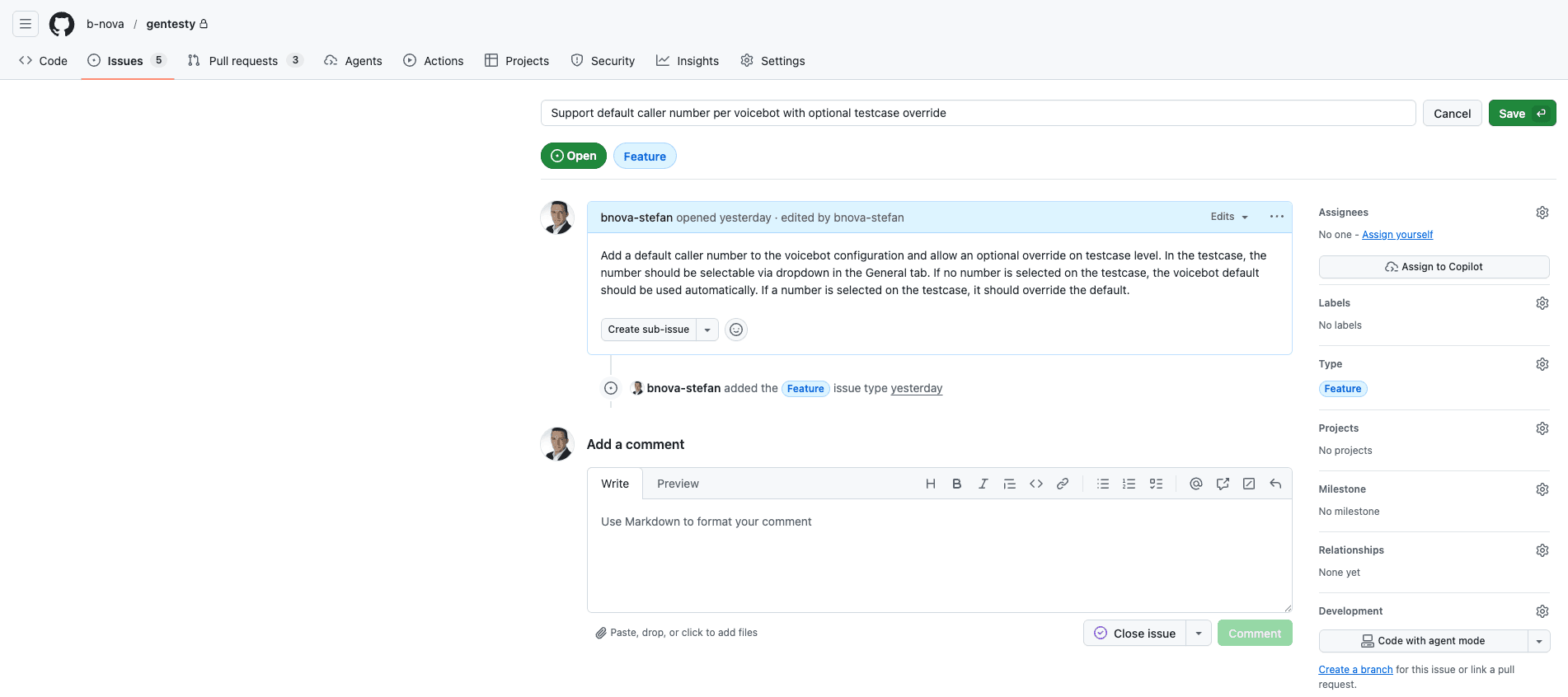
Morphora picked up the ticket automatically. Here's what happened next:
Analyzed the request. Morphora read the ticket, identified the intent — make the caller phone number configurable per test case while keeping the voicebot-level default as a fallback — and mapped it to the affected code areas across UI and backend.
Generated a minimal change. Nine files. +47 lines added, 3 removed. The change introduced a phone number selector on the test case configuration, added the field to the backend data model, and wired it through the call execution pipeline. If no number is selected on the test case, the voicebot default still applies.
Created a verified pull request. Morphora opened PR #257 with the implementation, a structured summary, and the verification results.
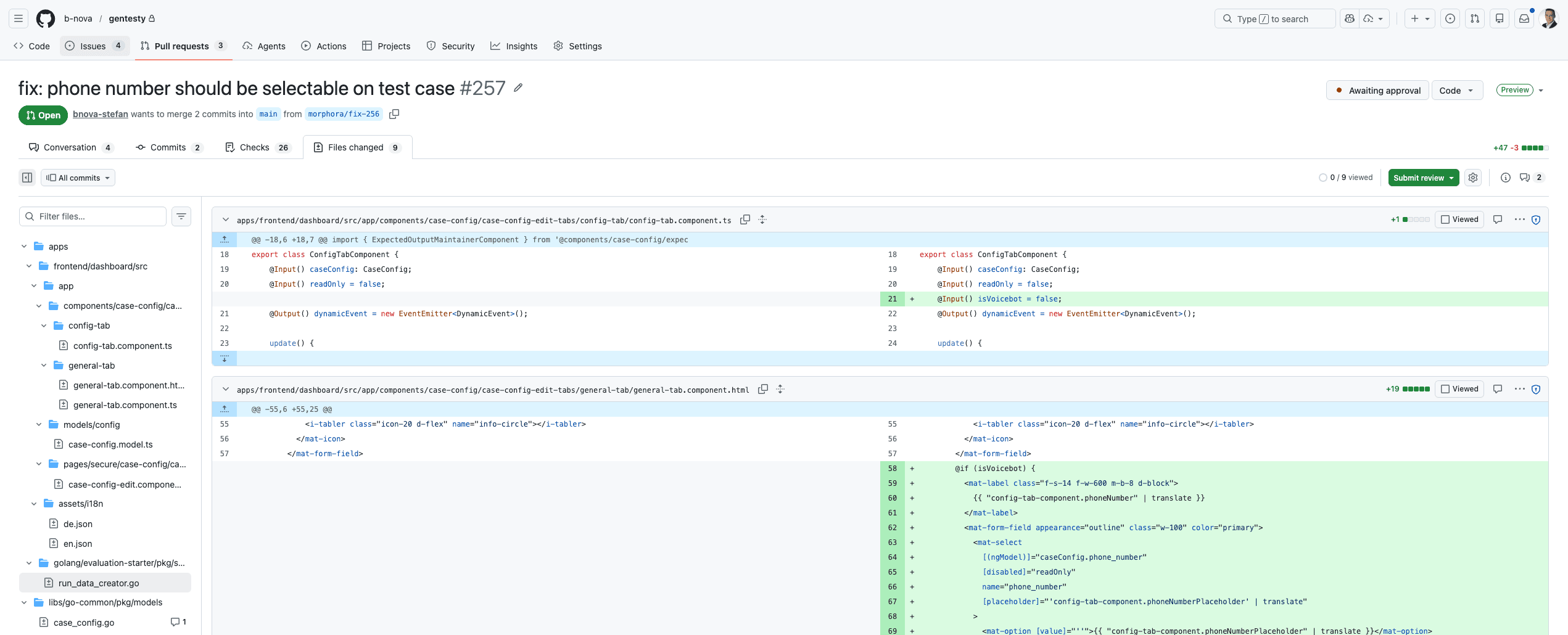
Twenty minutes. From ticket creation to a merged pull request with the feature live.
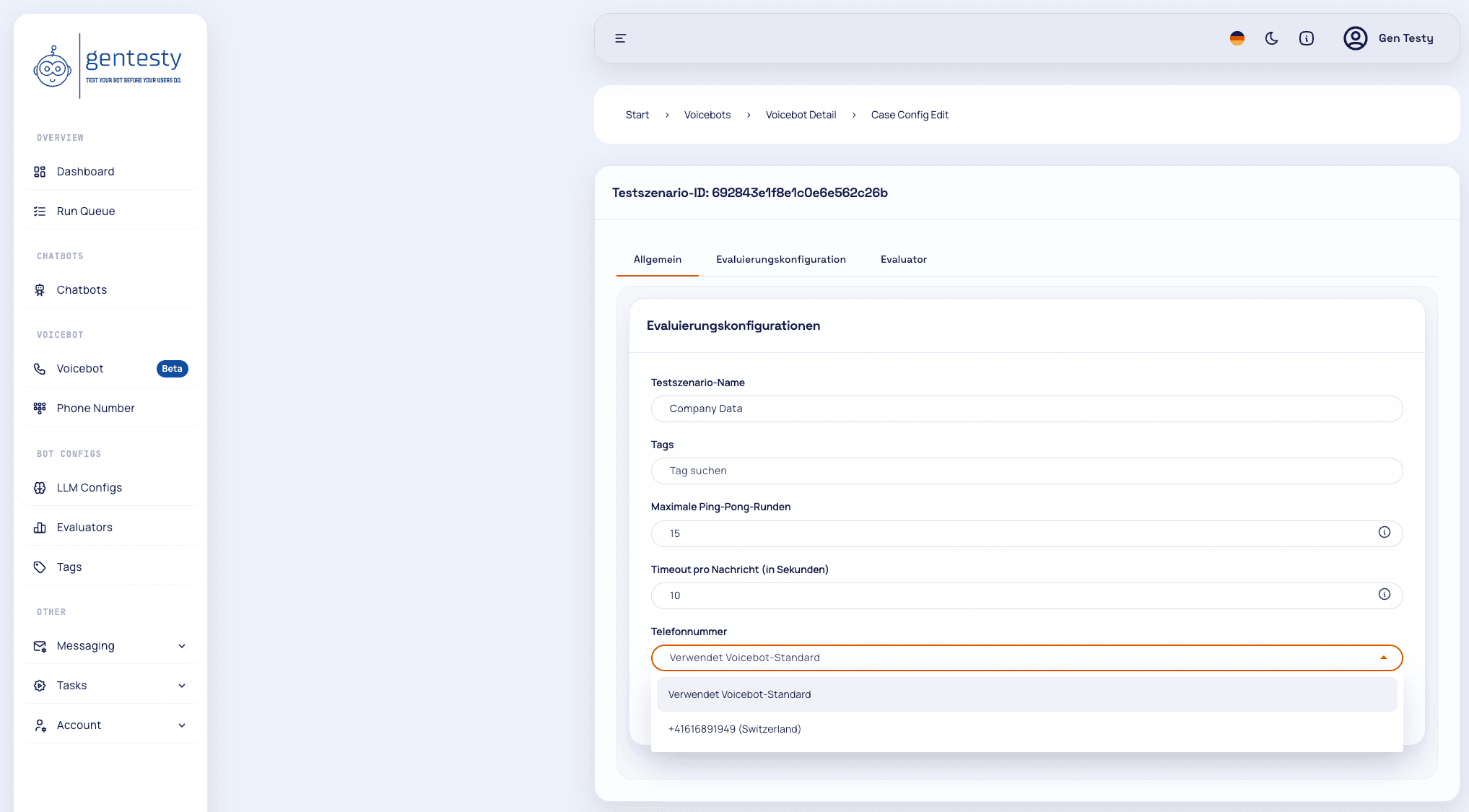
And here's what the customer sees now in gentesty — a phone number dropdown on every test case, with the voicebot default as the standard option:
Small changes shouldn't need big processes
This story isn't special because the feature was complex. It's special because it wasn't — and it still would have taken days the traditional way.
Most feature requests look like this. Well-scoped. Clear intent. Low risk. The bottleneck was never the code. It was everything around it: the triage, the context-gathering, the scheduling, the handoffs.
Morphora removes that overhead. It reads the ticket, understands the intent, finds the right files, writes a minimal change, verifies it, and hands you a clean PR. Engineers stay in the loop for review and approval — but the mechanical work is handled.
For our customer, that meant same-day delivery instead of next-sprint delivery. For the gentesty team, it meant one less ticket in the backlog and more time for the work that actually needs human judgment.
See it for yourself
This was one ticket, one feature, one product. But the pattern repeats: connect a ticket provider, connect a repository, and let Morphora turn requests into implementation.
Start with your next well-scoped ticket. See what 20 minutes looks like.
Morphora will give your tickets a career. Analyzing, coding, opening PRs — all covered. Coffee? Not yet. ☕